


At Toyota, having engineers or managers stand inside a circle drawn with chalk for a long time is one of the most famous learning practices of TPS. Because this method was often applied by Taiichi Ohno, it is known as the “Ohno Circle”. 🎯 Core Purpose:🟢 To see reality (Genchi Genbutsu)🟢 To understand processes from […]
Category Archives: Uncategorized
Let’s set up a suggestion system; let’s have boxes on the wall, cute suggestion forms, and rewards… Let the suggestions pour in, let the money roll in! 📦 Box on the wall📃 Suggestion forms exist💶 Even rewards exist❌ No suggestions, no results ⚠️ IN REALITYSuggestions go unanswered. After a while, the employee stops writing suggestions […]
The Name of Chaos is Always a Planning Problem…Production Planning ➡️ Material Planning ➡️ Purchasing In TPS (Toyota Production System), chaos is not a lack of planning, but the loss or confusion of process ownership. When these three departments are not clearly separated, what emerges is: A systematic failure disguised as a planning problem. In […]
04
Mar
Mar
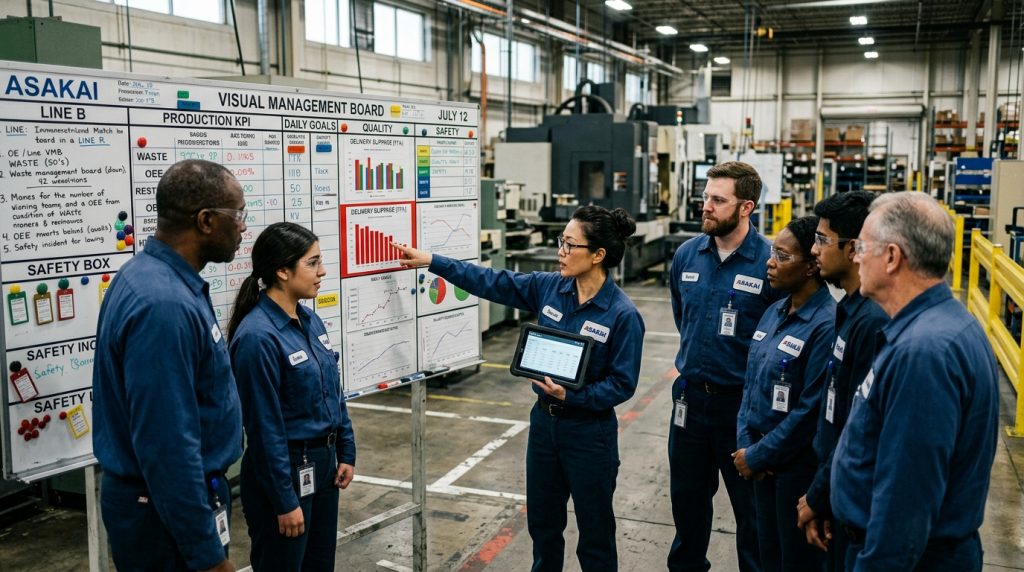
We set up a board and hold stand-up meetings every morning. But in reality: 🔴 Behavior doesn’t change. 🔴 Decision-making speed doesn’t increase. 🔴 Problems aren’t voiced, or simply cannot be. Meaning, there is a ritual, but no system. In many companies, even the ritual is missing. Why is Asakai Important in Lean Manufacturing? 1️⃣ […]
01
Nov
Nov
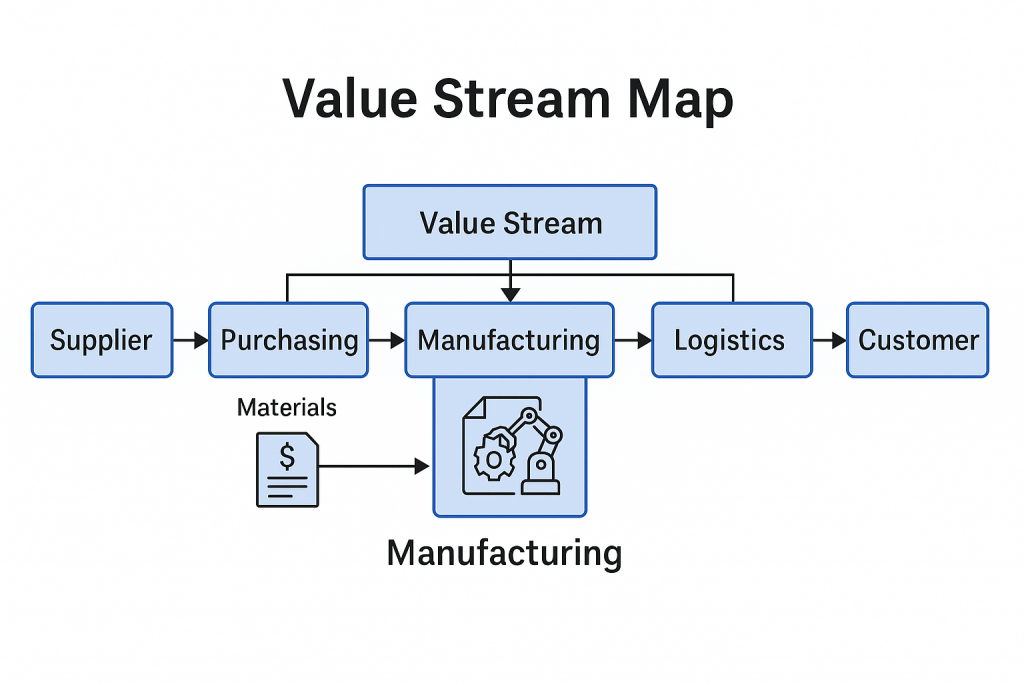
Lean projects without value stream-based organization fail to maintain the initial excitement. In this article I explain why and how to fix it. I have witnessed many projects related to lean transformation. You know the initial excitement; kaizen workshops are established, teams are motivated, measurements are made. The place is filled with energy for a […]
A Conversation with Art Byrne in Tokyo I met Art Byrne in Tokyo in October 2011. He had long since retired from Wiremold, but in his own words, he had not been “successful” in retirement and had joined a Boston-based investment capital firm called J. W. Childs Associates as a managing partner. This firm bought […]
23
Dec
Dec
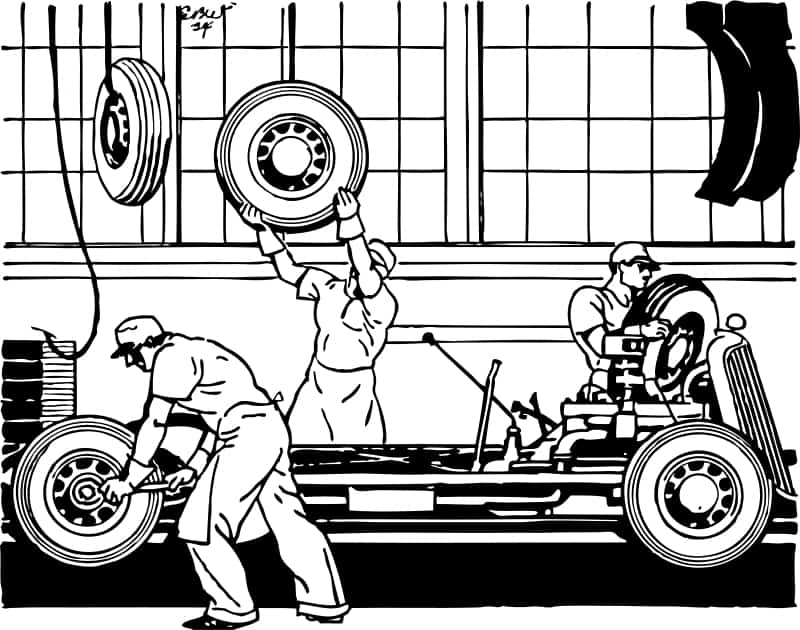
Having covered the history of assembly line management and line balancing in the last article, in this article we will discuss the 3 key principles of effective line management and continuous flow in a production and/or assembly line. These are; are gathered under 3 main headings. In assembly lines, typically, only line balancing is done […]
22
Dec
Dec
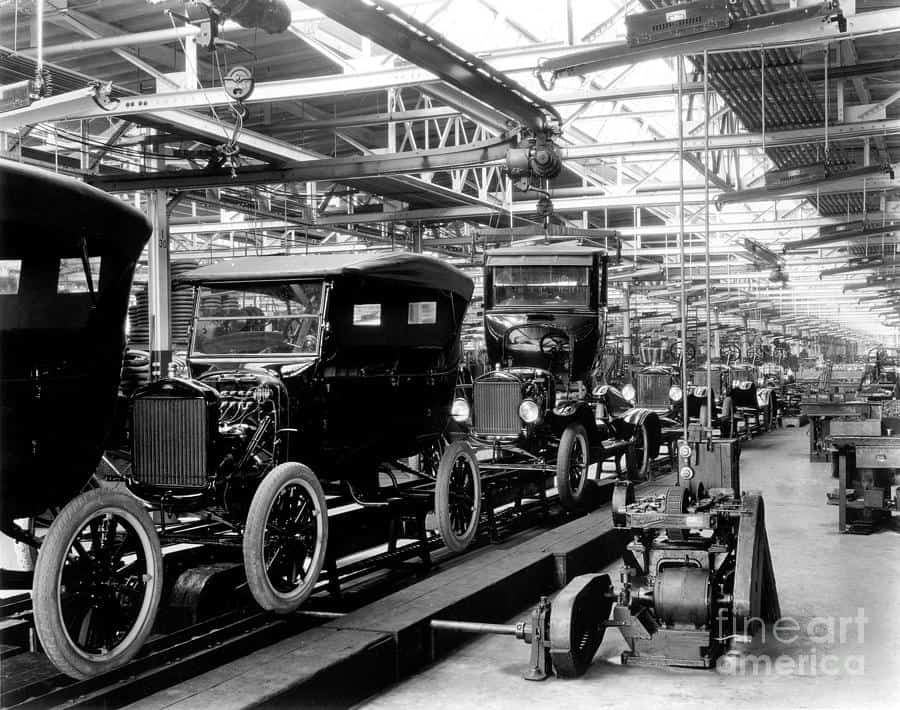
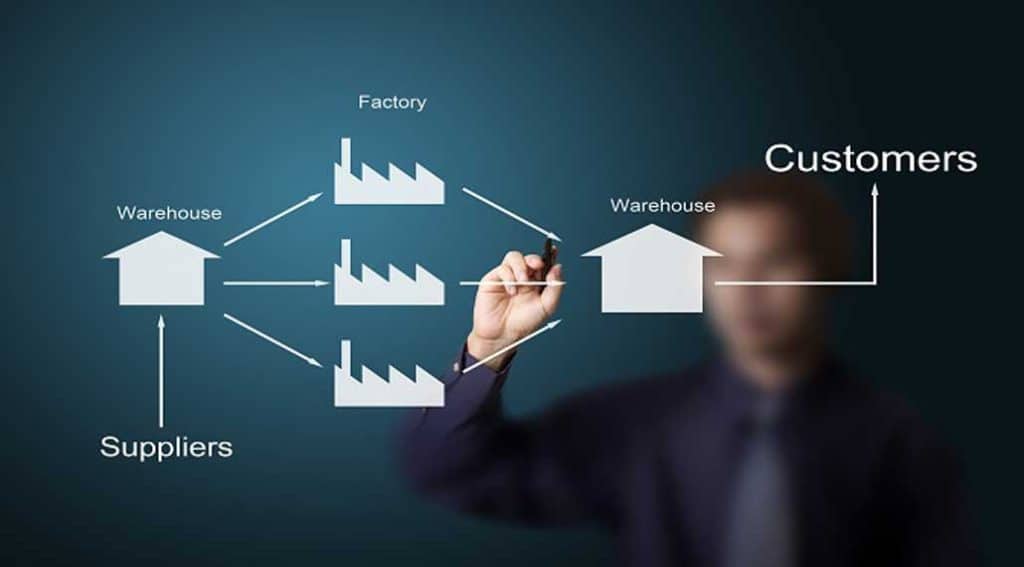
After the first industrial revolution initiated mass production with steam engines (Industry 1.0), the logic of mass production aimed at increasing worker productivity by breaking down tasks into small parts, as pursued by Henry Ford, brought about the second industrial revolution (Industry 2.0). The concept of Line Balancing emerged precisely from here. The principles of […]
22
Dec
Dec
One of the most followed sections of the Lean Consultant blog since its establishment (although the numbers are small today) is the Lean Authors section. Despite my call last year, I am once again calling out to the Lean Thinkers eager to write. “Write to me here about what you’re doing, what you’re seeing related […]
22
Dec
Dec
Those who read the value article know. What Did We Say? “A product and/or service that maximizes the customer’s expectations” So far so good; but what about the parts that don’t match? This is hidden in the same article. This is exactly what Lean calls WASTE. As such, it is necessary to address the details […]
- 1
- 2